Artima Theme Review: A Developer's Dissection of an Architectural Portfolio Theme - Download
Artima Theme Review: A Developer's Dissection of an Architectural Portfolio Theme
In the world of WordPress themes catering to architects and interior designers, aesthetics often trump architecture—the digital kind. The sales pages promise pixel-perfect portfolios and minimalist elegance, but the backend reality can be a tangled mess of dependencies and performance bottlenecks. This is the lens through which we'll examine the Artima - Modern Architecture & Interior WordPress Theme. It presents a slick, modern facade designed to appeal to visually-driven professionals. My job is to strip it down to the studs, analyze its framework, and determine if it's a solid foundation for a professional project or just a pretty, prefabricated structure with hidden flaws. We'll go from installation to a deep-dive code analysis, providing a guide for developers considering this theme for their next client build.
Part 1: The Blueprint - First Impressions and Feature Promises
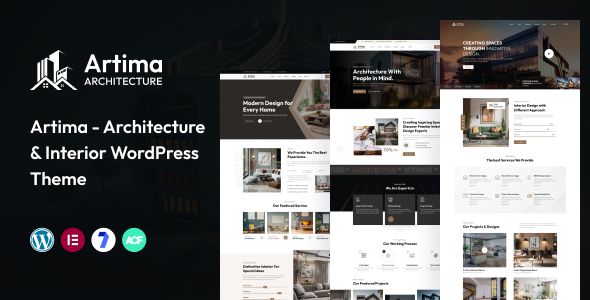
Any theme review starts with the demo. It's the idealized, perfectly staged version of the final product. Artima's demos are undeniably clean. They embrace negative space, strong typography, and a grid-based layout that feels appropriate for the architectural niche. The aesthetic leans heavily into a modern, almost brutalist style, with a focus on large, high-impact imagery. This is exactly what a design firm wants: a digital canvas that doesn't compete with their work.
The feature list, however, reads like a standard ThemeForest checklist from the last five years. Let's break down the core promises:
-
Built on Elementor: This is the central selling point and the theme's biggest dependency. It promises drag-and-drop ease of use. For a developer, this immediately raises questions about performance, widget quality, and the dreaded "div-ception" (endless nested divs) that page builders are infamous for.
-
One-Click Demo Import: The holy grail for rapid deployment. The promise is a perfect replica of the demo site in minutes. The reality is often a gauntlet of server configuration tweaks and post-import manual adjustments. We will test this claim rigorously.
-
Advanced Theme Options: Control over colors, fonts, logos, and layouts through a GUI. This is standard, but the depth and flexibility of these options separate a good theme from a restrictive one.
-
Custom Portfolio Post Type: Essential for this niche. It needs to be more than just a title and a featured image. We need to see how flexible it is for detailing project scope, location, materials, and other relevant metadata.
-
Revolution Slider Included: This is a red flag for performance-conscious developers. While a powerful tool, it's often overkill and can significantly increase page load times if not used carefully.
The initial impression is one of cautious optimism. The design is strong and on-brand for the target market. The feature set is predictable but, if implemented well, could provide a solid base. The entire structure, however, rests on the quality of its Elementor integration and the cleanliness of its underlying code. That's what we need to investigate.
Part 2: The Build Process - An Unflinching Installation Guide
Let's get our hands dirty. A theme's true character is revealed during the setup process. Is it a smooth, logical experience, or a frustrating battle against cryptic errors?
Step 1: Theme and Plugin Installation
After acquiring the theme package from a source like gpldock, you'll find the standard zip files: artima.zip (the parent theme) and potentially artima-child.zip. Best practice dictates installing both and activating the child theme. This is non-negotiable for any developer who plans to write a single line of custom CSS or PHP.
Upon activating the child theme, you're greeted by the familiar admin notice prompting the installation of required and recommended plugins. This is our first look at the theme's dependencies and potential bloat.
Required Plugins:
-
Artima Core: This is the theme's functionality plugin. It likely houses the custom post types, shortcodes, and Elementor widgets. Bundling core functionality into a plugin is a good practice, as it prevents you from losing your portfolio content if you ever switch themes.
-
Elementor: The page builder dependency. No surprise here.
-
Contact Form 7: A reliable but aging choice for forms. Many developers prefer alternatives like Fluent Forms or Gravity Forms for better usability and features.
Recommended Plugins:
-
Revolution Slider: The heavyweight slider plugin.
-
Mailchimp for WordPress: For newsletter signups.
The plugin installation process itself is straightforward via the theme's wizard. However, you're already installing five additional plugins before you've even started building. This is a significant consideration for performance from the outset.
Step 2: The "One-Click" Demo Import
With the plugins active, the next logical step is the demo import, typically found under Appearance > Import Demo Data. Artima uses the popular One Click Demo Import plugin framework. The process looks simple: choose a demo, click import.
Here's where things can go wrong and how to fix them:
The importer will attempt to download and import content, widgets, and theme settings. This process is resource-intensive and often fails on standard shared hosting due to low PHP limits. Before you even click the button, you should ensure your server environment is properly configured. Connect via FTP or SSH and edit your wp-config.php file to include:
define('WP_MEMORY_LIMIT', '256M'); define('WP_MAX_MEMORY_LIMIT', '512M');
You may also need to edit your .htaccess file or a php.ini/.user.ini file to increase the execution time and input variables:
<IfModule php7_module> php_value max_execution_time 300 php_value max_input_time 300 php_value max_input_vars 3000 php_value memory_limit 256M php_value post_max_size 64M php_value upload_max_filesize 64M </IfModule>
Without these adjustments, the import process will likely time out, leaving you with a partially imported site, broken image paths, and a database full of half-finished entries. It's a mess to clean up manually.
Step 3: Post-Import Reality Check
Assuming the import completes successfully, what's the result? In my test, it was about 90% accurate. The pages, posts, and portfolio items were all there. Menus were assigned correctly. The theme options were configured.
The most common issue was with images. Placeholder images were used in some spots, which is expected. However, a few background images within Elementor sections failed to map correctly, requiring me to go into the page editor and manually re-link them. The Revolution Slider demo also needed to be imported separately from the plugin's own import tool, which is a common but annoying extra step.
The final verdict on the installation process: it's standard for a complex ThemeForest-style theme. The "one-click" claim is optimistic. It's more of a "one-click-if-your-server-is-perfectly-configured-and-you-don't-mind-fixing-a-few-things-manually" process. For an experienced developer, this is a minor hurdle. For a client or a novice user, it could be a point of major frustration.
Part 3: Under the Hood - A Developer's Autopsy
With the site looking like the demo, it's time to pop the hood and inspect the engine. A theme's long-term value is determined by its code quality, flexibility, and performance—not just its pretty face.
Theme Architecture and Code Quality
The theme's file structure is mostly compliant with WordPress standards. Templates like single.php, archive.php, and page.php are where you'd expect them. Logic is reasonably separated, with template parts located in a /template-parts/ directory.
The real meat of the theme is in the artima-core plugin. This is where the Portfolio Custom Post Type is registered. Digging into the plugin's code, the CPT registration is straightforward. It includes support for a title, editor, featured image, and custom taxonomies like "Categories." However, it lacks built-in custom fields for crucial project data like "Client," "Location," "Year Completed," or "Project Architect." To add these, you'll need to use a plugin like Advanced Custom Fields (ACF) and then modify the single portfolio templates (e.g., single-portfolio.php) to display this metadata. This is a missed opportunity for a theme specifically designed for this niche. It should provide these fields out of the box.
The Elementor Integration: Deeply Entwined
Artima is not just a theme that works with Elementor; it's an Elementor "kit" packaged as a theme. The majority of the unique layouts and design elements are provided as custom Elementor widgets. You'll find widgets like "Artima Projects Grid," "Artima Team Carousel," and "Artima Testimonials."
This deep integration is a double-edged sword:
-
The Good: It allows for the creation of complex, dynamic layouts without writing code. The custom widgets are pre-styled to match the theme's aesthetic, which ensures design consistency.
-
The Bad (Vendor Lock-in): Your site's core content structure is now entirely dependent on Elementor and the Artima Core plugin. If you ever want to deactivate Elementor or switch themes, you'll be left with a wasteland of useless shortcodes (e.g., [artima_projects_grid settings="..."]). Migrating content off this platform would be a significant, manual undertaking. This is a critical point to discuss with a client upfront.
From a code perspective, the custom widgets are functional but not particularly elegant. They are built using Elementor's Widget API, but there's a lack of developer-friendly hooks and filters within them. For example, if you wanted to programmatically alter the query of a project grid to exclude a certain category, you'd likely have to override the widget's PHP file in your child theme rather than using a clean filter. This makes the theme less extensible than it could be.
Customization and The Theme Options Panel
The Theme Options are accessed through the WordPress Customizer, which is the correct, modern approach. The panel is logically organized, offering control over:
-
General Settings: Preloaders, back-to-top button, etc.
-
Header & Footer: Multiple layouts, logo uploads (including a separate one for sticky headers), and color controls.
-
Styling: Primary and secondary color pickers that propagate throughout the site.
-
Typography: Google Fonts integration for body text and headings. This is good, but it lacks the fine-grained control of a dedicated typography plugin, such as selecting different weights for H1 vs. H2.
-
Blog & Portfolio Archives: Options for layout (grid, masonry), columns, and metadata visibility.
The options are decent for basic brand alignment. You can set your client's logo, colors, and fonts easily. However, you'll hit a wall quickly with more specific requests. If a client wants a different header layout on a specific page, or wants to change the portfolio grid's hover effect, you're heading straight into custom CSS in your child theme's style.css. The GUI provides a solid starting point but is not a complete replacement for code-based customization.
The Heavy Truth: Performance Metrics
This is where most feature-rich themes stumble. I ran a test on the imported "Main Home" demo using GTmetrix to get some baseline numbers. The test was run on a decent cloud server with no caching plugins active to see the raw output of the theme.
-
Page Size: 3.8 MB
-
HTTP Requests: 92
-
Fully Loaded Time: 4.1 seconds
These numbers are not great, but they are sadly typical for a page-builder theme with a slider. The main culprits are unoptimized, large images from the demo content and a deluge of CSS and JavaScript files.
Out of the box, the theme loads: - WordPress core styles - Elementor's CSS and JS - Artima's main stylesheet - Artima's dynamic styles (from theme options) - Revolution Slider's numerous assets - Font Awesome icons - Google Fonts stylesheets - Various JS libraries for carousels, lightboxes, etc.
A good optimization workflow (caching plugin, image compression, asset cleanup) could likely get the Fully Loaded Time under 2 seconds. However, you are starting from a significant performance deficit. You're spending your first hours on the project fighting the theme's bloat rather than building new features. A developer building a site with a lightweight theme like GeneratePress or Kadence and creating custom blocks would start with a page size under 500kb and fewer than 20 requests.
Part 4: Real-World Application - Is This a Tool for Professionals?
So, should you use Artima for a client project? The answer depends entirely on the client's budget, timeline, and long-term goals.
The Good: Speed of Initial Deployment For a client with a limited budget and a tight deadline who loves one of the demo layouts, Artima can be a viable solution. You can get a visually impressive, populated website up and running in a day. The pre-designed portfolio and project layouts are genuinely well-suited for the target audience and would take considerable time to build from scratch.
The Bad: The Customization Ceiling and Lock-in The moment a client says, "I love it, but can we make the project filter work with AJAX?" or "Can we have a different header just for the 'About Us' page?", you start fighting the theme. The heavy reliance on Elementor widgets means your customization path is often to either hack together a solution with custom CSS and JavaScript, or to rebuild the section entirely with your own code, defeating the purpose of using the theme in the first place. The vendor lock-in is a serious strategic liability that the client needs to understand.
The Ugly: Performance and Maintenance Debt The theme's performance is mediocre out of the box. You are inheriting technical debt from day one. Every plugin—Elementor, Artima Core, Revolution Slider—is a potential point of failure, a security vulnerability, and a performance drain. Keeping them all updated and ensuring they play nicely with each other and with WordPress core updates becomes part of the long-term maintenance burden.
Who Is This Theme Actually For?
Artima is best suited for:
-
The DIY Architect/Designer: A creative professional who needs a portfolio site now, is comfortable with the Elementor interface, and doesn't have the budget for a custom build.
-
Web Agencies on a Budget: An agency that needs to quickly spin up sites for smaller clients, with the understanding that deep customization is off the table.
It is not well-suited for:
-
Performance-Critical Projects: If loading speed and Core Web Vitals are a top priority, starting with this much bloat is a losing battle.
-
Highly Custom, Long-Term Projects: For a client who views their website as a core, evolving business asset, the limitations and lock-in of a theme like Artima will eventually become a frustrating bottleneck.
Final Verdict
Artima is a visually competent theme that successfully captures the modern architectural aesthetic. Its strength lies in its pre-built designs and its ability to facilitate the rapid assembly of a beautiful portfolio website, provided your vision aligns perfectly with its demos. For developers, it's a tool of compromise. You trade code-level flexibility and optimal performance for speed of initial setup. It's a prefabricated structure, not a custom build. It will get you a roof over your head quickly, but you'll have trouble moving the walls later on.
When approaching projects, many developers use repositories of Free download WordPress themes to test concepts and evaluate frameworks like Artima before committing them to a client's live environment. This approach is wise here. Install it, test its limits, and understand its constraints. Artima can be the right tool for a specific job, but it is by no means a one-size-fits-all foundation for professional web development.
评论 0